

I’m walking through the Barnes & Noble in Edina, Minnesota. My book should be published but my publisher just went bankrupt. I got one email from the editor: “I’m very sorry this happened.” That was it. Weeks of silence since. No idea if I’ll get paid for nine months of evening and weekend work.
Then I see it on the shelf. My name, my book, in the tech book section with the rest of the SQL Server books (back then there were several). Someone printed it. Someone stocked it. But who?
Pager Duty
I’m a SQL Server consultant at 3M in the early 2000s. Consulting is my day job and I love it - but it is definitely challenging. I carry a pager for on-call duty. That pager goes off when I’m driving, eating dinner, or trying to sleep. Supporting multiple SQL Server environments (and occasionally Sybase) means you learn fast or you suffer.
I started keeping notes that I kept in a green folder. Scripts that actually worked at 2AM in the morning. Troubleshooting paths that didn’t waste time. Heuristics for when the documentation was wrong or missing. The green folder kept getting thicker.
One day I looked at my stack of notes and thought - this is starting to look like a book.
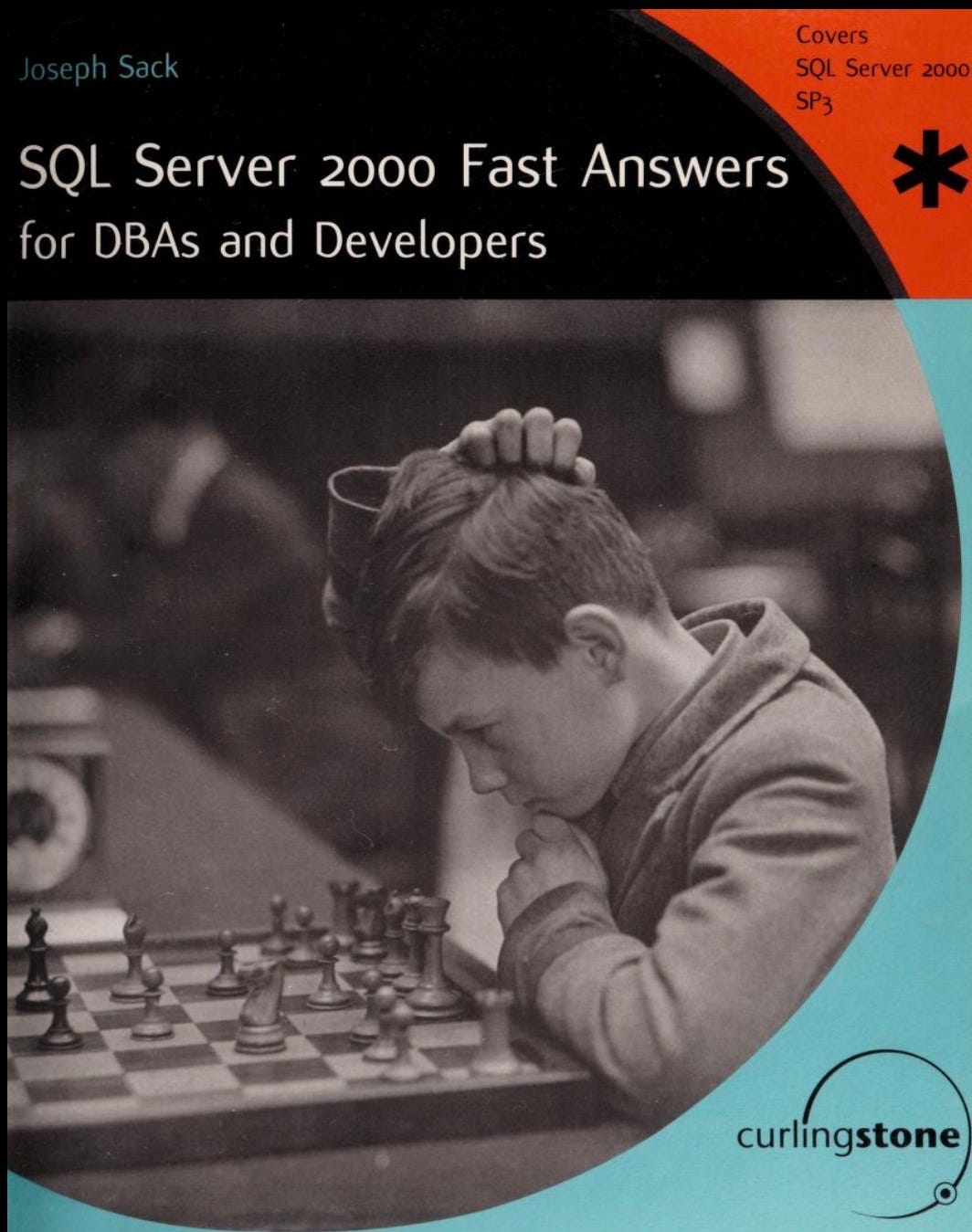
So I sent a proposal to a publisher called Curlingstone. They said yes. I spent nine months writing at night and on weekends. Met every deadline. Turned in the final manuscript.
Then the publisher went bankrupt (being from the UK, they said “Insolvent”).
Barnes & Noble to Microsoft
Apress had purchased all the book rights and honored the outstanding royalty payments. Mystery solved, money eventually paid.
That first book SQL Server 2000 Fast Answers for DBAs and Developers led to a second one, SQL Server 2005 T-SQL Recipes, and some editorial work. Then in no small part, it got me my first job at Microsoft as a Premier Field Engineer. The recruiter had found my book and reached out.
Years later, when I wanted to move into product management for the Query Processing team, I had a white paper on Cardinality Estimation to point to. More public work leading to the next opportunity.
What stops you from sharing?
My natural instinct is to keep to myself. Put your head down, solve the problem, move on. Writing things down for public consumption means opening yourself up. Someone will find the mistake. Someone will have a better way. Someone will just be unkind about it.
But there’s this other pull. You want to grow your career. You want to be helpful. You see someone struggling with the same problem you solved last month. You want the community to get better, which means sharing what works. You want to learn from people who know more than you do, which means putting your work where they can see it and respond.
The work you’re keeping private might be more valuable than you think.
There's also a huge amount of value in putting what you know out there as it helps establish your personal/professional/technical brand. As you found when that Microsoft recruiter reached out, you were now a known quantity with demonstrated subject matter expertise.
Other people are the worst reason to not do something, and the best reason to do something. Unless the other people are lawyers, and you’ll get sued for sharing things 😃